
How We Test for ADHD
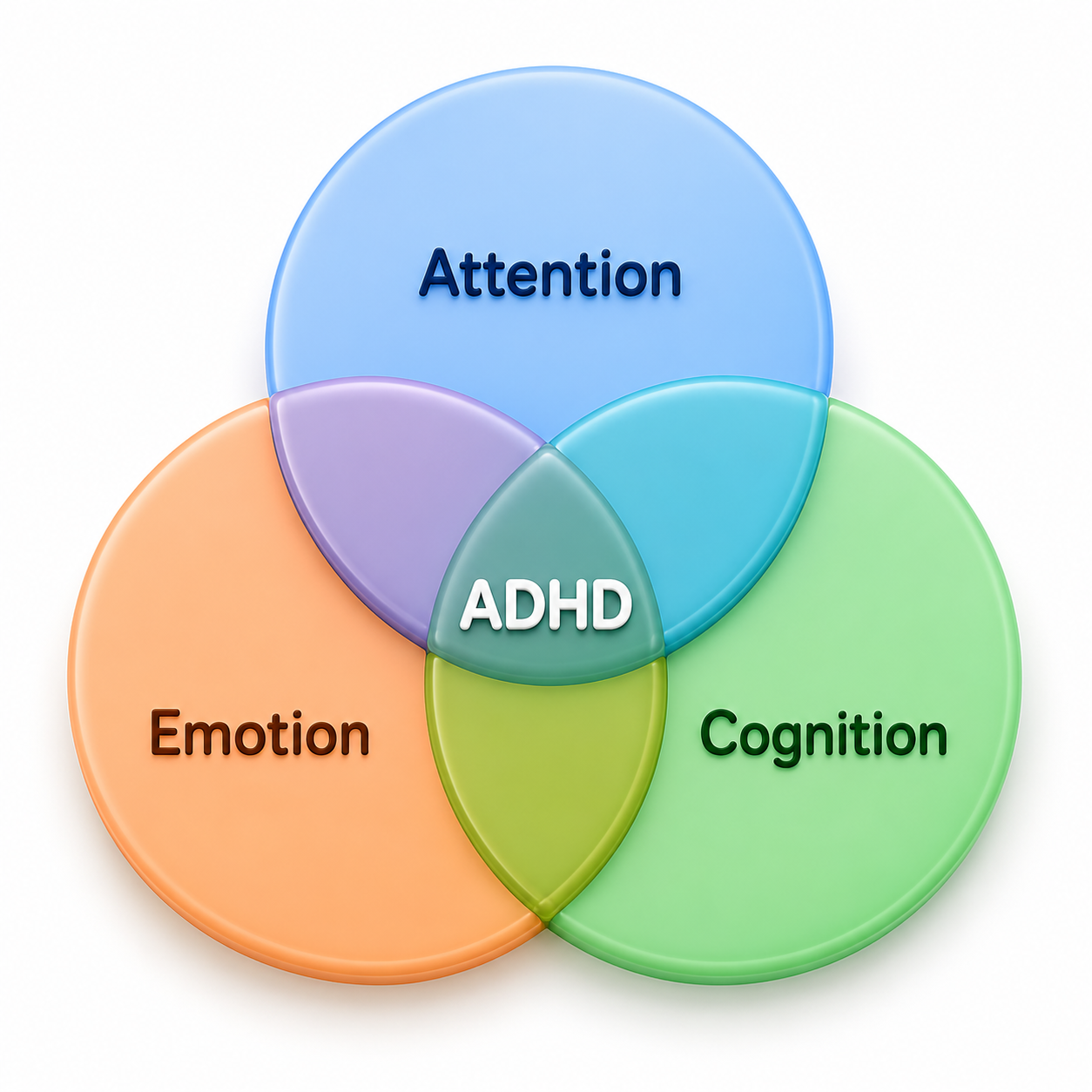
Testing Is More Than a Checklist
ADHD symptoms like inattention, distractibility, or poor organization are not unique to ADHD. These same difficulties can appear in many conditions such as:
Anxiety, Depression, Autism, Trauma, Bipolar disorder, Learning disorders.
A brief visit with your doctor is insufficient to determine if the symptoms are caused by ADHD or by another underlying condition.
Parts of an ADHD Assessment
1. Neuropsychological Testing
Objective measurement of brain capacity helps us understand why attention is being inhibited. The tests measure multiple aspects of brain function that can affect attention such as:
Memory, Impulse Control, Processing Speed, Multi-Tasking, Open-Mindedness, Intelligence, Trauma Symptoms, Mood and Personality Traits.
These tests help explain the interconnected nature of each person’s cognitive function. For example, a person with poor working memory may forget information moments after hearing it, making it appear as though they were not paying attention.
2. Interview with a Clinical Psychologist
During your meeting, the psychologist evaluates:
Your developmental history (including childhood symptoms)
Academic and occupational functioning
Emotional and behavioral patterns
Medical and mental health history
The onset, consistency, and context of attention difficulties
The goal is to understand why attention problems exist, not simply if they exist. An experienced psychologist can determine whether the symptoms are best explained by ADHD or by another condition that mimics ADHD on the surface.
Your Detailed Psychological Report
Our reports include a diagnosis, 1-page summary explaining all the results, and treatment recommendation specific to your individual case.
The report can be used to:
Get a prescription from your medical provider.
Provide documentation for academic accommodations.
Guide treatment planning, therapy, and skill-building strategies.
Help patients understand their own cognitive strengths and weaknesses.
The report is widely accepted by physicians, schools, and other institutions. View a sample report here.
Why Comprehensive Testing Matters
Many people know they struggle with attention. ADHD testing helps identify the cause and provide helpful conclusions. A proper neuropsychological assessment offers clarity, credibility, and direction to help you move forward.